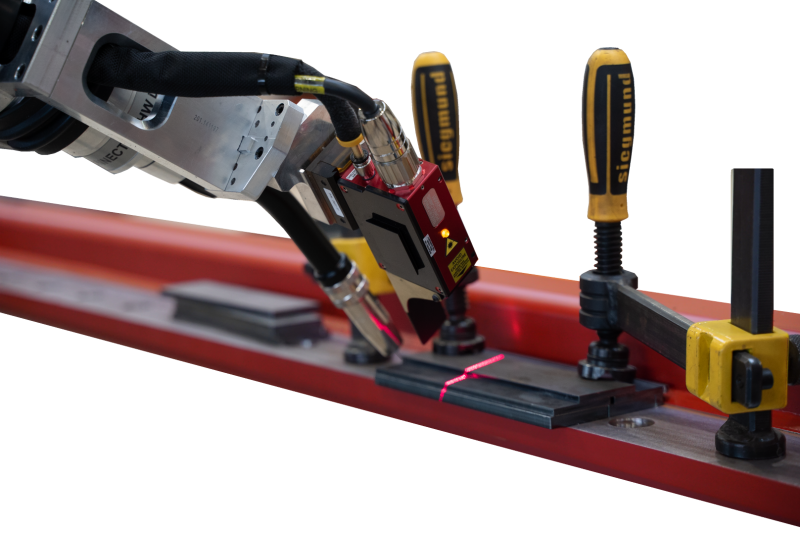
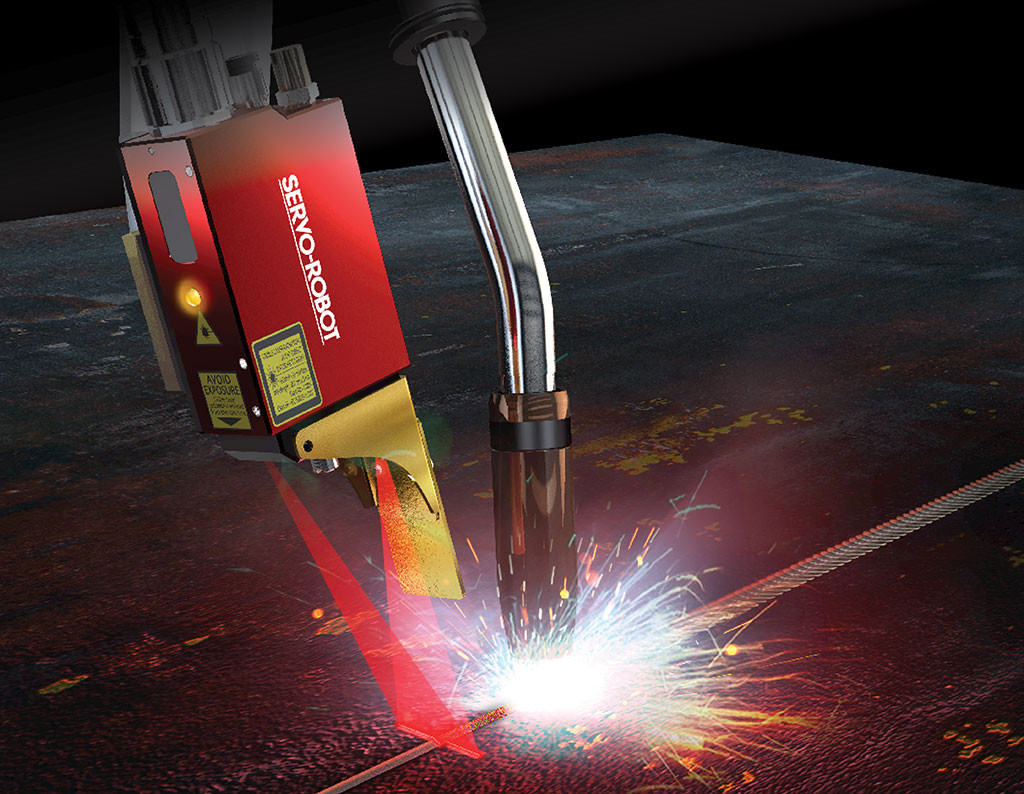
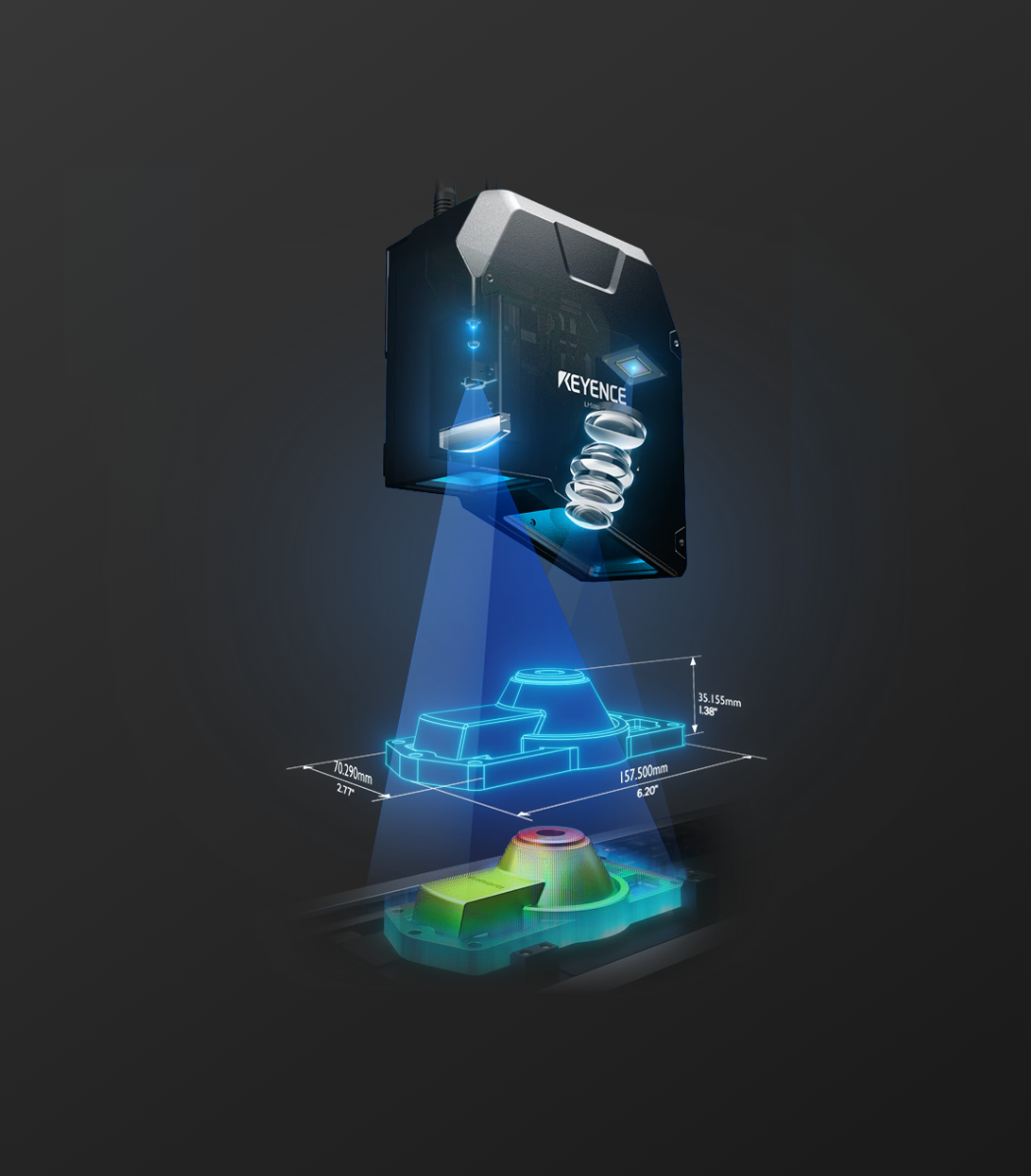
Laser tracking systems enable precise tracking of weld joints during robotic welding. A laser sensor detects the position of the joint and automatically adjusts the torch path, ensuring high-quality, repeatable welds even with complex geometries and tight tolerances.
To increase productivity and cost-effectiveness.
The use of laser tracking reduces the need for precise workpiece positioning and manual corrections, and shortens setup times. The result is a more stable welding process, less scrap, and more efficient production. The technology is suitable for a variety of materials, welding processes, and weld geometries, and enables the automation of even the most demanding applications.
Show more
Show less
Key Features
- Adaptive welding with dynamic adjustment of the torch path during welding
- Reliable, high-precision laser tracking of weld joints
- Automatic correction of the robot path for consistent weld quality
- Maximum flexibility for use in various welding processes
Benefits
Partners
We offer laser tracking systems from three renowned manufacturers, …
For more information about a partner, click on its logo.
i-CUBE Sensor System
i-CUBE is an advanced hybrid sensor system designed for monitoring and analyzing processes in robotic welding applications. The system enables precise monitoring of the weld joint, detection of the start of welding, and verification of any deviations between the programmed and actual robot path.
Optionally, the sensor can be mounted on a special sixth-axis gripper, allowing the robot to automatically place it on a stand when necessary, should it interfere with the welding process.
Key Advantages
Robust design with protection against splashes and ambient radiation
Mechanical protection of the optics with an air supply that prevents the accumulation of dust and dirt
Direct selection of the laser sensor’s operating mode via the robot controller
Easy calibration and adjustable weld seam detection process
Optimized for 3D measurement and workpiece detection in welding and cutting applications
Power-Trac
Power-Trac is a high-performance tracking system designed for precise tracking of weld seams across various welding processes and robotic configurations. An advanced sensor enables dynamic adjustment of the robot’s path based on workpiece deviations, thereby maintaining optimal speed, stability, and weld quality. Fully customizable control ensures reliable operation even in demanding industrial conditions.
Wiki-Scan
It is a mobile device for visual and surface quality inspection of welds.
It is equipped with a high-precision laser camera and a large touchscreen, enabling fast, accurate, and user-friendly measurement of deviations and assessment of weld quality in the field or on the production floor.
Robo-Scan
Robo-Scan combines all the functionalities of the Wiki-Scan system but is designed for robotic quality control. It is mounted directly on a robot and controlled by a robotic control unit.
It allows one robot to perform welding while another simultaneously scans and analyzes the welds—or a single robot can perform both tasks sequentially. This increases efficiency, reduces the need for additional work steps, and ensures complete real-time quality control.
Are you interested in laser tracking systems?
Fill out the inquiry for free consultation and a customized quote.